İçgörüler
Köpeğinizin Beden Dilini Okumak
Çoğu davranış sorunu, bir soruna dönüşmeden çok önce görülebilir — neye bakacağınızı bilirseniz.

Çoğu davranış sorunu, bir soruna dönüşmeden çok önce görülebilir — neye bakacağınızı bilirseniz.
By the time a dog growls, snaps, or bolts, it has usually already communicated its discomfort five or six different ways — and been missed every time. Dogs are constantly signaling. Most behavior "problems" are really communication failures on the human side of the leash.
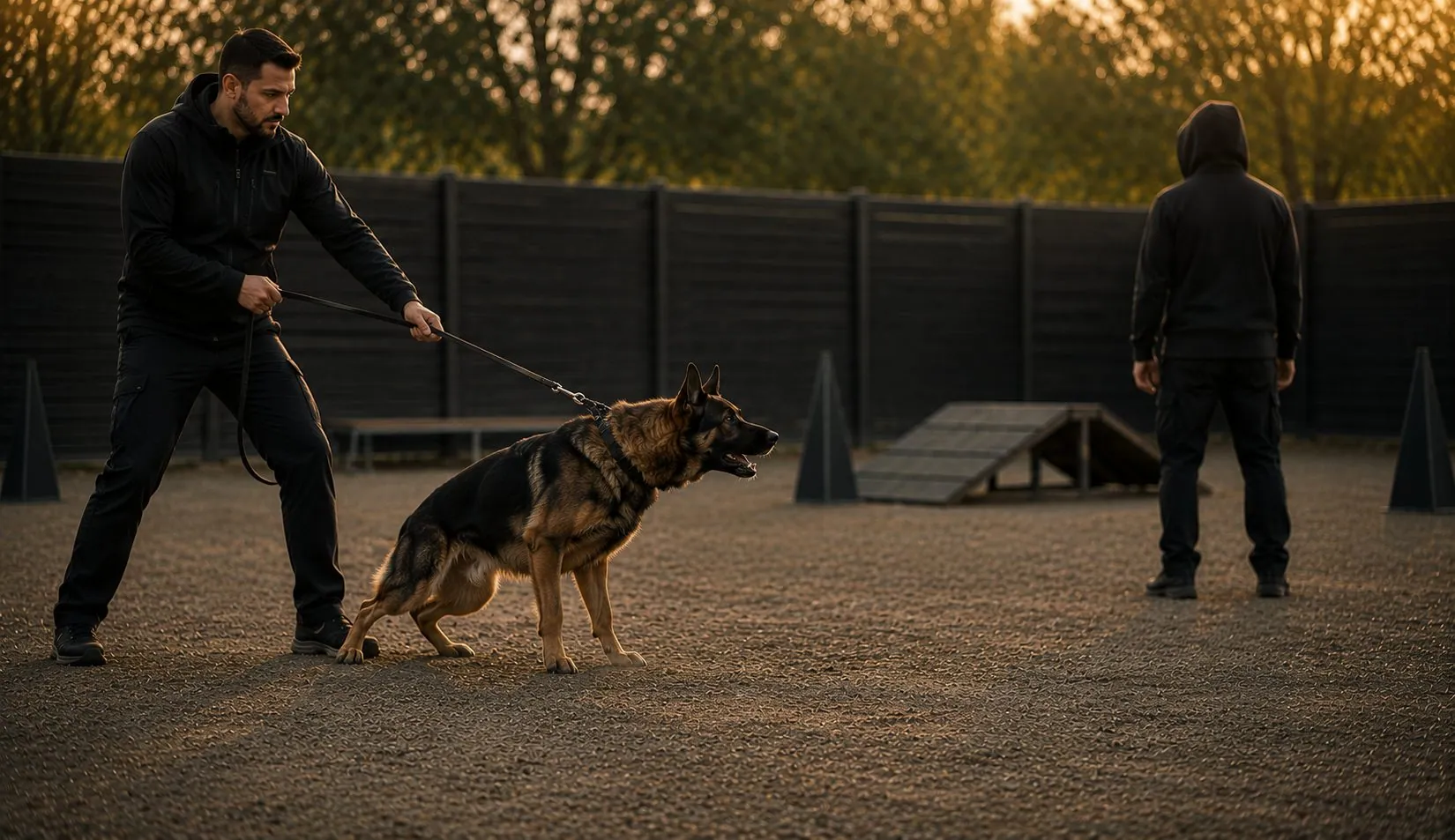
A stiff body, a closed mouth, a tail held high and rigid rather than loose and wagging, weight shifted backward, ears pinned or locked forward, whale eye (the whites of the eyes showing at the side) — these all show up well before a growl. None of them mean "aggressive." They mean "uncomfortable," and a dog that's ignored while uncomfortable eventually learns that subtle signals don't work and escalates to ones that do.
Lip licking with no food nearby, yawning when not tired, turning the head away, sniffing the ground suddenly during a greeting — these are calming signals, and dogs use them both to soothe themselves and to de-escalate a situation with another dog or a person. When you see them, the dog is telling you it needs space or a pause, not that it's being "weird."
A wagging tail is not automatically a happy dog. Tail height, speed, and stiffness all change the message — a high, stiff, fast wag during a tense encounter with another dog is closer to a warning than a greeting. Body language has to be read as a whole picture: tail, ears, weight, mouth, and eyes together, not any single signal in isolation.
An owner who can read these signals can intervene before a situation escalates — creating distance, redirecting attention, or simply ending an interaction a few seconds earlier. An owner who can't is always reacting after the fact, which is exactly why the same "random" incidents keep repeating with dogs that otherwise seem well-behaved.
Reading a dog accurately is a taught skill, not an instinct most people already have — which is why it's built directly into our evaluation process and into handler training. We don't just teach the dog; we teach the person holding the leash to see what the dog has been saying the whole time.