İçgörüler
Gözyaşı Olmadan Kafes Eğitimi
Kafes bir kutu gibi değil, bir in gibi hissettirmeli. İşte inleme ya da suçluluk olmadan oraya nasıl varılır.

Kafes bir kutu gibi değil, bir in gibi hissettirmeli. İşte inleme ya da suçluluk olmadan oraya nasıl varılır.
Crate training fails most often for one reason: the crate gets introduced as a consequence — for chewing, for accidents, for being "too much" — instead of as a neutral, comfortable space the dog chooses on its own. Once a crate feels like punishment, undoing that association takes far longer than building the right one from day one.
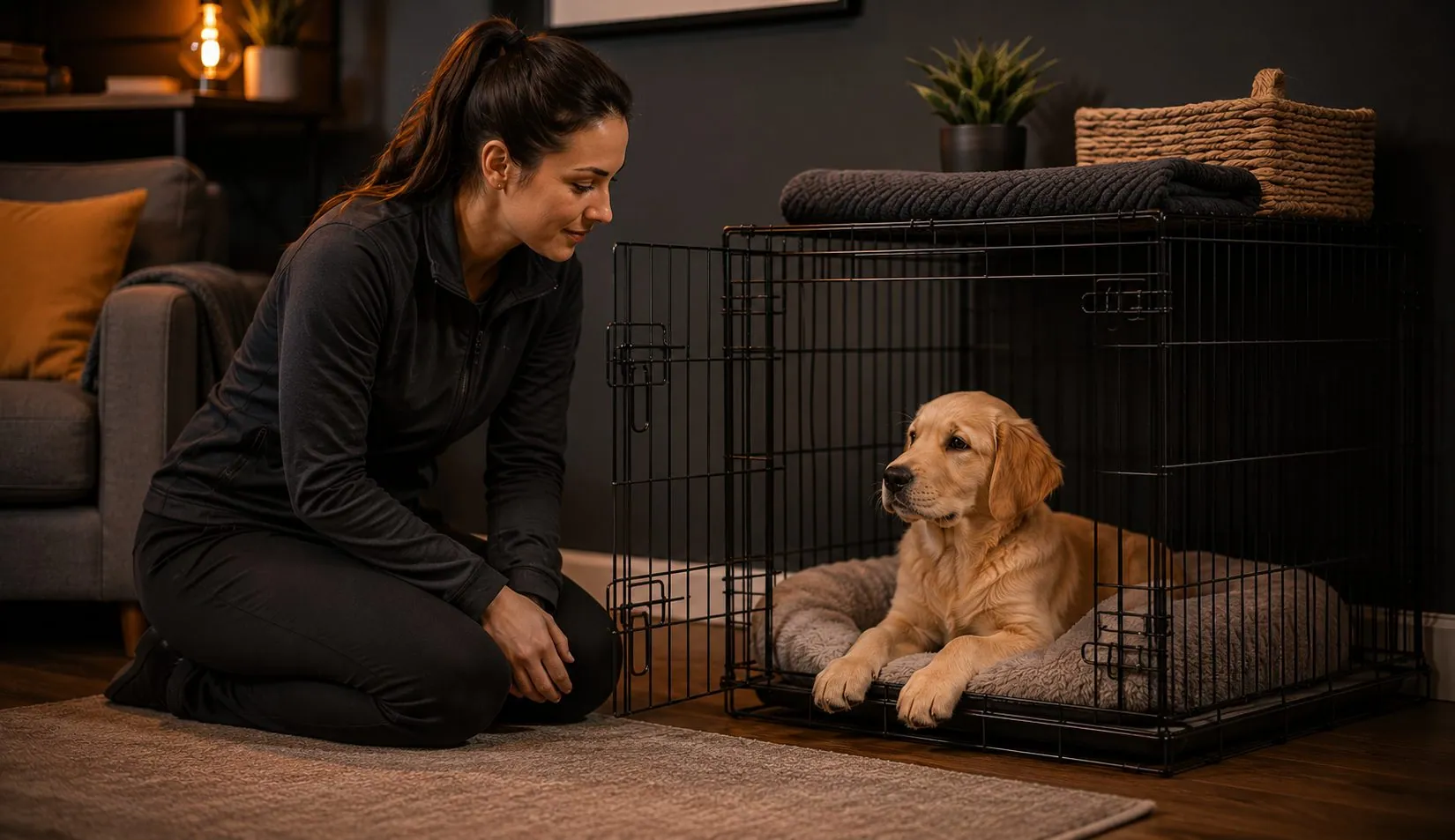
The instinct is to put the dog in the crate and close the door on the first day. Instead, feed meals near the crate, then just inside the doorway, then fully inside with the door open, over several days — not one session. The door only closes once the dog is voluntarily going in and settling on its own, not being placed and shut in.
There's a real difference between protest whining (the dog testing whether whining gets the door opened) and genuine panic (rapid breathing, drooling, frantic scratching at the crate, escalating rather than settling). Waiting out protest whining is appropriate. Waiting out genuine panic is not — that's a sign the process moved too fast and needs to go back a step, not push through.
A crate that's too large lets a puppy potty in one end and sleep in the other, undermining house training. A crate placed in an isolated room removes the dog from the family, which increases anxiety rather than reducing it. For most dogs, a crate sized to stand, turn around, and lie down comfortably — no more — placed in a normal living space, works best.
A dog that's genuinely comfortable in a crate has a portable safe space for travel, vet visits, recovery from injury or surgery, and boarding — situations that are far more stressful for a dog with no crate experience at all. This isn't just a puppy-phase tool; it's infrastructure that pays off for the dog's entire life.
Crate training is folded directly into our Crate Training program and into the early stages of Puppy Training — not as an isolated trick, but as part of building a dog that can be calm and settled anywhere, not just when it's the center of attention.