Insights · Agencies
What a Police Department Should Evaluate Before Buying a Dual-Purpose K9
Selection, validation, handler course and sustainment — the questions that decide whether a dog becomes a working asset or an expensive problem.

Selection, validation, handler course and sustainment — the questions that decide whether a dog becomes a working asset or an expensive problem.
A dual-purpose K9 — patrol plus detection — is a multi-year commitment: the dog, the handler's time, vehicle and kennel setup, veterinary care, training days, certification and, eventually, replacement. Units that treat the purchase as the decision usually discover the real decisions later, in the field. ICONK9 works with police, military, government and security organizations on the front end of that process: evaluating the dogs, the handlers and the mission before money is committed, and building the program from that assessment. Region does not apply — teams come to the Nokesville, Virginia campus or training blocks are arranged on site.
Import paperwork, titles and video clips describe a dog on its best day. What a unit needs to know is nerve under pressure, clarity of drive, recovery from stress, environmental stability (slick floors, stairs, darkness, noise, vehicles), social behavior around people who are not threats, and health that will survive a working career. ICONK9 sources dogs internationally through selected breeders, trainers and professional networks and reviews suitability, temperament, health, veterinary status and training potential before recommending a dog for a mission profile — see certified dogs. If the dog is not right for the role, the answer is no.
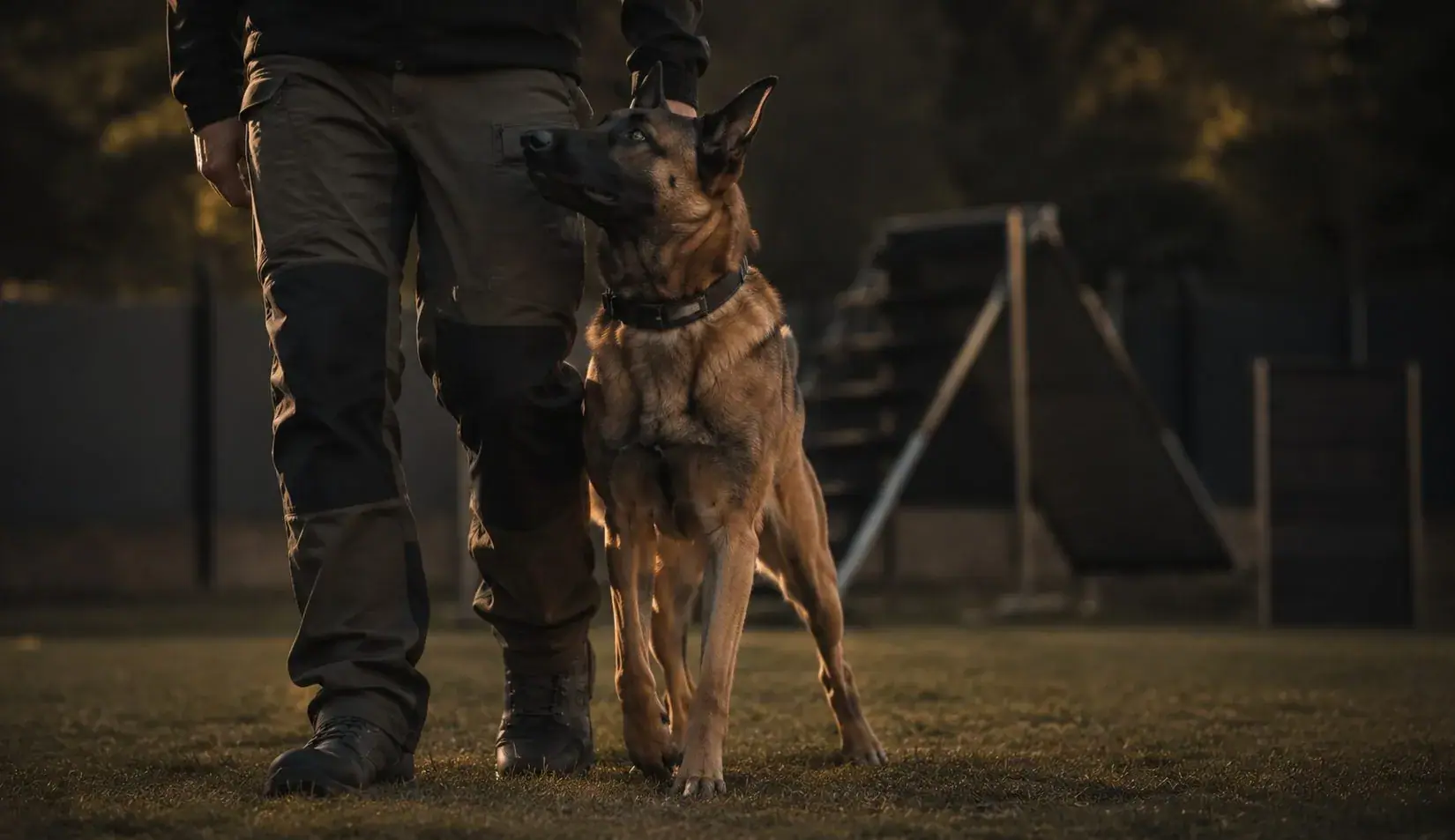
A dual-purpose dog must be validated in the environments it will actually work: building searches with real layouts, area searches with terrain and distraction, vehicle work, apprehension under control with a clear out, and detection with proper odor discrimination and alert behavior. ICONK9's patrol/tactical and detection programs are scenario-based from the first session — noise, crowding, unfamiliar layouts, real stress — because a team that has only trained in ideal conditions hesitates when reliability matters most.
In ICONK9's handler system the dog is not trained separately; the handler is trained alongside the dog, with continuous feedback, evaluation and refinement. The handler course covers equipment and safety, understanding the K9 mind, health and first-aid awareness, daily management, kennel and transport routine, handling mechanics and operational control. Units that skip this step buy a trained dog and receive an untrained team.
Working dogs decay without maintenance. The program should define validation checkpoints, maintenance training cadence, remote monitoring where practical, and a path for returns and refresher blocks. ICONK9's system ends in adaptation and sustainment — the dog and handler transferred into the operating environment, then followed up — because the system is only complete when it works in the field, not on the training day.
Buying on video and titles without an independent evaluation; buying a dog before the handler is selected and trained; treating certification as the finish line rather than a checkpoint; skipping environmental validation because the dog performed on the seller's field; and budgeting for the purchase but not for sustainment. Each of these produces the same result twelve months later — a dog that is either not used or used unsafely.
The fix is not exotic. Evaluate the dog, the handler and the mission together; validate in the environments the team will work; train the handler with the dog; and define maintenance before the first shift.
Capability brief and evaluation come first and set everything else. Selection and validation of a sourced dog take as long as the dog needs — a dog rushed through validation is the most expensive dog a unit will ever own. Handler course and team integration follow, then adaptation to the operating environment and sustainment checkpoints. ICONK9 does not sell a fixed number of weeks; the assessment sets the program, and the program sets the duration.
Capability brief: your unit, mission profile, current dogs and handlers. Evaluation at the campus (or on site by arrangement): dogs, handlers and their interaction. Written program and price, confirmed before work begins. Then training, validation, adaptation and sustainment. Consulting is $250 per hour; unit programs are quoted after evaluation. ICONK9 is founded and led by İrşat Üner, a trainer with a military K9 background (retired non-commissioned officer) and 26+ years across 12+ countries; programs follow the five pillars of behavioral science, evaluation and validation, professional ethics, working dog methodology and international K9 practices.
See the Police & Government K9 programs page and send a capability brief through the contact form — unit, mission profile, dogs and handlers — to schedule the evaluation.
ICONK9 sources dogs internationally and reviews suitability, temperament, health and training potential before recommending a dog for a mission profile; advanced working-line dogs are validated for protection and detection work. Dogs are quoted individually after the match and evaluation.
Yes — handler education is mandatory. In the ICONK9 handler system the handler is trained alongside the dog with continuous feedback, evaluation and refinement.
Units train at the Nokesville, Virginia campus; structured training blocks at your location can be arranged after the initial evaluation. Region does not apply.
Every engagement starts with an evaluation of dogs, handlers and mission; the program, its length and price are set from that assessment and confirmed in writing. Consulting is $250 per hour.